Quick start guide for SACRE members
Serving on a SACRE can be very rewarding and supports your local community in an important way. Whichever group you represent, your active participation can make a valuable contribution to the quality of religious education and collective worship that pupils experience in schools in your local area and to the coherence of your local community.
A SACRE?
SACRE stands for: Standing Advisory Council on Religious Education.
What is the purpose of a SACRE?
A SACRE is unique. The law says that RE must be taught in all schools and a SACRE’s role is to advise its local authority on what needs to be done to improve religious education (RE) and collective worship (CW) for schools in its area. This is because RE is not part of the National Curriculum; it is a local responsibility. Through the SACRE, local communities and teachers have the opportunity to influence directly what pupils learn in RE.
Who attends meetings?
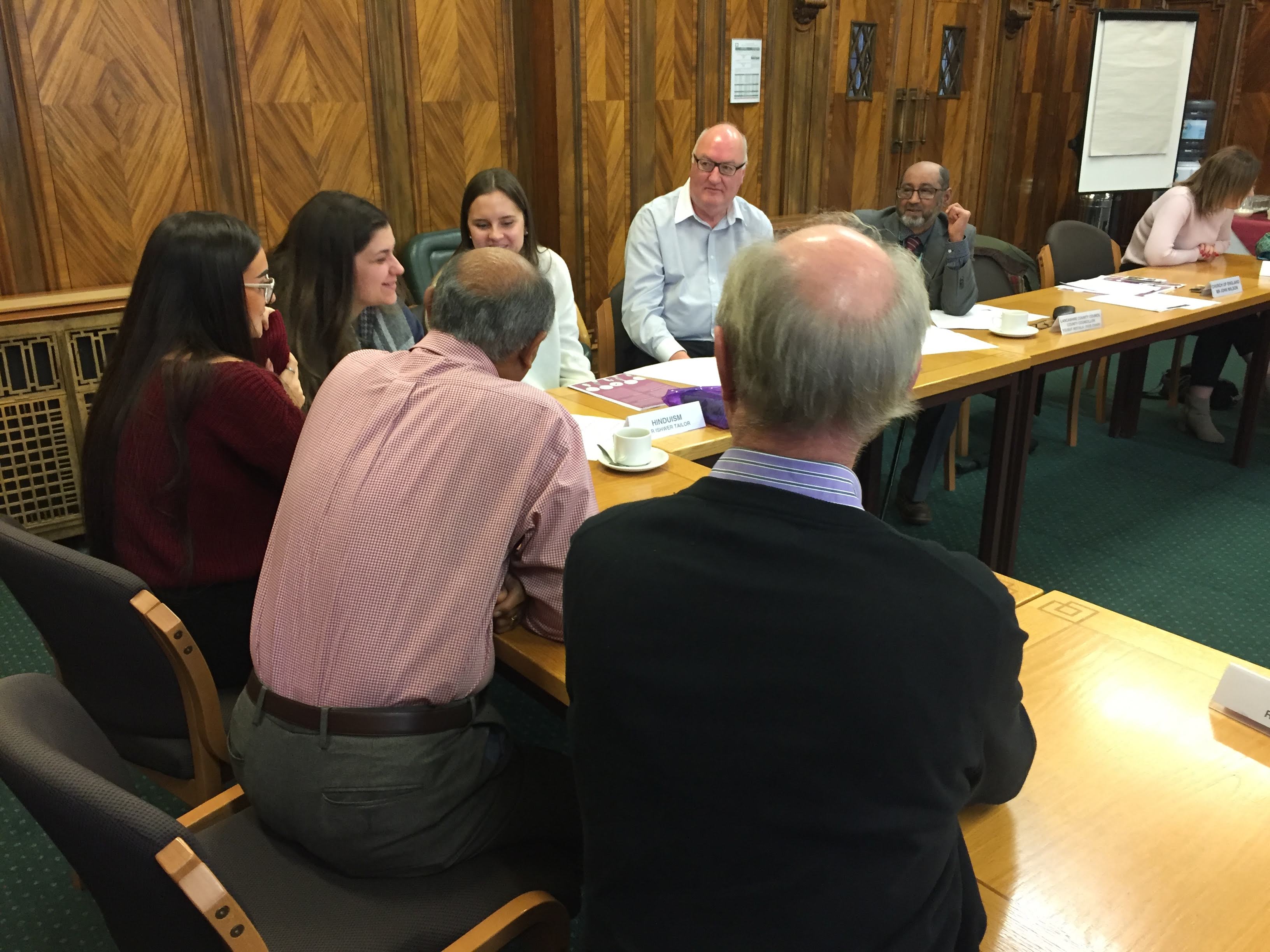
A SACRE is set up to represent a balance of all the interests of the local community. Each SACRE is made up of four groups:
• Group A – Christian denominations other than the Church of England and representatives from faiths in the local area
• Group B – Church of England
• Group C – Associations representing teachers
• Group D – Local authority representatives
In addition, a SACRE can co‑opt people to support its work.
What are a SACRE’s duties?
The SACRE’s main function is to advise the local authority on matters related to the religious education, which follows the locally agreed syllabus, and on collective worship in schools.
It:
• can require the LA to review its agreed syllabus;
• must consider applications from a head teacher that the school be allowed to modify the ‘wholly or mainly of a broadly Christian character’ requirement for collective worship (this is known as a determination);
• must publish an annual report of its work.
In a broader sense, a SACRE’s role is to support good RE and collective worship within its schools by:
• giving advice on ways of teaching RE according to the locally Agreed Syllabus, including the choice of teaching materials;
• monitoring schools’ provision for RE and collective worship as well as the spiritual, moral, social and cultural development (SMSC) of pupils;
• advising the LA on the provision of training for teachers in RE;
• considering complaints about the provision and delivery of religious education and collective worship referred to it by the LA.
What is a locally agreed syllabus?
The locally agreed syllabus is the statutory document for RE in the local authority. It sets out what should be taught to pupils in all key stages and the standards expected of them at the end of each key stage. It is produced by an agreed syllabus conference.
The agreed syllabus has to be reviewed every five years. If, at some other time, a majority of the committees of the SACRE asks the LA in writing to reconsider its agreed syllabus, it must convene a conference for that purpose.
And collective worship?
By law every pupil must take part in a daily act of collective worship unless they have been withdrawn by their parents, or if in the sixth form they have decided to withdraw themselves. The majority of acts of collective worship should be wholly or mainly of a broadly Christian character.
As with RE, SACRE has a monitoring role, but it also makes decisions on determinations.
Determinations?
A school can apply to SACRE for a determination to provide alternative collective worship if it feels that collective worship which reflects the broad traditions of Christian belief is not appropriate for their pupils. Applications for determinations are made to the SACRE by the head teacher of any community school after consultation with the school’s governing body.
Determinations are only possible for schools that do not have a religious character. Many SACREs have an agreed process to enable such an application to take place.
(They are called determinations because SACRE ‘determines’ whether the case being made in an application to modify the law for all or a group of pupils in a school is appropriate.)
What will my responsibilities be as a SACRE member?
As a SACRE member, you should be committed to education and to respecting the views of others. You will have responsibility to support children’s learning in RE and collective worship, and to work for the highest standards in both.
You should represent your community or sponsoring group in the work of SACRE and communicate the interests of the SACRE back to them. You should be able to network effectively in order to contribute to the relationship between the SACRE, your local community and schools. The specific opportunities you have will also depend on the interest group you represent.
For further and more detailed information, ask members of your local SACRE, or look around this site.